
Blog
AI-Driven Product Lifecycle Insights in Home Decor

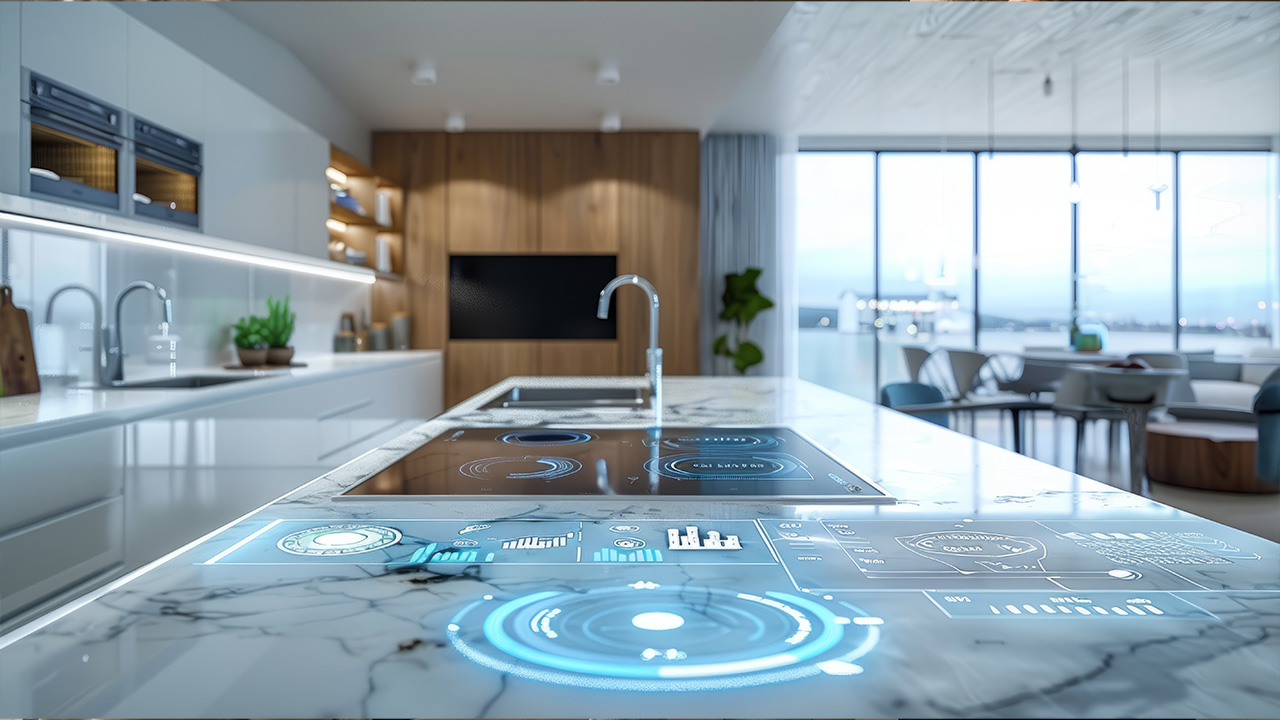
AI décor lifecycle is emerging as a powerful approach to understand and optimize the environmental footprint, durability, and circular potential of home décor products. By embedding AI at each stage of a product’s lifecycle — from design to disposal — furniture makers, retailers, and platforms like DecoraSync can generate sustainable, optimized, and transparent solutions for users and businesses alike.
In this article you will learn:
- How AI can inform lifecycle decisions in decor
- The role of Life Cycle Assessment (LCA) combined with AI
- Use cases and challenges for home decor
- How DecoraSync could leverage AI lifecycle insights
- Best practices to adopt this approach
What is the Product Lifecycle & Lifecycle Insights
A product lifecycle encompasses all phases of a product’s existence: raw material extraction, design, manufacturing, distribution, use/maintenance, and end-of-life (reuse/recycle/discard).
Lifecycle insights are data-driven understandings of environmental, economic, and functional impact across those stages. In the décor/furniture world, a lifecycle insight might quantify the carbon emissions of a chair over 20 years, or identify which material choices lead to lower waste at disposal.
Traditionally, these insights come from Life Cycle Assessment (LCA): a structured method to estimate the environmental impacts (e.g. greenhouse gas emissions, energy, water use) associated with a product across its life.
However, classical LCAs are resource-intensive, static, and often limited by missing data. This is where AI enters — to make lifecycle insights faster, more predictive, and scalable.
How AI Enhances Lifecycle Insights in Home Decor
Data Filling & Emissions Estimation
One key challenge in LCA is missing data — e.g. unknown emission factors, uncounted transport steps, or supplier-specific impacts. AI can help predict missing emission factors using statistical models or neural networks, improving accuracy. For example, a study showed using Artificial Neural Networks (ANNs) to predict life cycle environmental impacts with considerable success.
Other AI systems automate matching processes between production activities and emission factor databases (such as ecoinvent).
Design-Stage Optimization
During concept and design phases, AI can generate designs that reduce environmental cost. This includes using generative AI to suggest material substitutions (e.g. selecting bamboo instead of hardwood), or adjusting product geometry to minimize waste. Research indicates AI can significantly improve design efficiency and visualization in product lifecycle management contexts.
Integrating AI into Product Lifecycle Management (PLM) processes allows earlier detection of environmental hotspots and supports decisions before production begins.
Predictive Maintenance & Use-Phase Insights
In the use phase, AI can monitor how furniture is used (e.g. wear, environment) and predict when maintenance or replacement is optimal. This extends lifetime and reduces resource waste. AI-driven platforms like CarbonBright already offer automated tracking and analysis of product-level sustainability metrics.
End-of-Life & Circular Decision Support
AI can assist decisions about refurbishment, recycling, or remanufacturing. For example, using models to determine whether a piece is better to disassemble and recycle or to refurbish for reuse. Integration into product-level life cycle decisions supports circular economy goals.
Life Cycle Assessment of Furniture: Key Findings & Trends
A recent comprehensive LCA of 25 furniture items showed that pre-production (material sourcing, component production) often carries the highest environmental burden, followed by manufacturing, distribution, and end-of-life stages.
This means design decisions (material, sourcing, weight) have outsized influence. For designers using AI-powered lifecycle insights, focusing early on those stages yields the greatest impact.
Another study examining a pinewood table analyzed manufacturing and distribution phases to improve sustainability choices.
These findings support prioritizing AI-driven lifecycle optimization at the design and sourcing stages — where impact is largest.
Use Cases & Opportunities for Home Decor Platforms
Here are concrete ways a platform like DecoraSync or its partners might apply AI-driven lifecycle insights:
- Sustainability Score for Products Show users a “lifecycle score” or carbon footprint estimate per item, dynamically calculated using AI models and real-time data.
- Design Suggestions Based on Lifecycle Efficiency When a user builds a room, AI could suggest lower-footprint alternatives: materials, finishes, or furniture that balances performance and sustainability.
- Supplier & Material Transparency Use AI to audit supplier data, predict risk (e.g. high-carbon suppliers) and flag better alternatives.
- Lifecycle-Based Filtering & Search Let users filter decor items by lowest predicted lifecycle impact, not just price or style.
- Circular Economy Features Facilitate resale, refurbishment, or component reuse — AI can help determine which options are optimal.
Challenges & Considerations
- Data Quality & Availability AI models are only as good as their training data. Many suppliers lack transparent environmental data, making predictions less reliable without careful validation.
- Model Generalization vs Specificity AI must balance general models with product-specific contexts (material, region, usage). Overly generic models risk being misleading.
- Computational Complexity Real-time lifecycle predictions require efficient algorithms — balancing accuracy with speed.
- User Understanding & Trust Users may distrust AI-generated environmental numbers unless transparency is provided (explainability, sources).
- Integration with Existing Systems Integrating AI lifecycle tools into existing design, retail, and inventory systems is non-trivial.
Best Practices for Adopting AI Lifecycle Insights
- Start with hybrid models: combine AI predictions with expert-verified data
- Validate AI outputs with periodic audits
- Provide explainable scores — show which lifecycle stages are the “hot spots”
- Use conservative assumptions when data is uncertain
- Phase roll-out: begin with few product categories then expand
Conclusion
AI-Driven lifecycle insights are no longer purely academic — they’re actionable tools for transforming the home decor industry. By embedding AI throughout the product lifecycle, brands and platforms can deliver designs that are beautiful and sustainable.
For DecoraSync, applying AI decor lifecycle tools offers a way to differentiate by offering transparency, eco-conscious product recommendations, and circular design support. The future of smart home decor is not only intelligent — it’s responsible.
References:
NatureScienceDirectResearchGateResearchGatecarbonbright.coInnoRenew CoE